
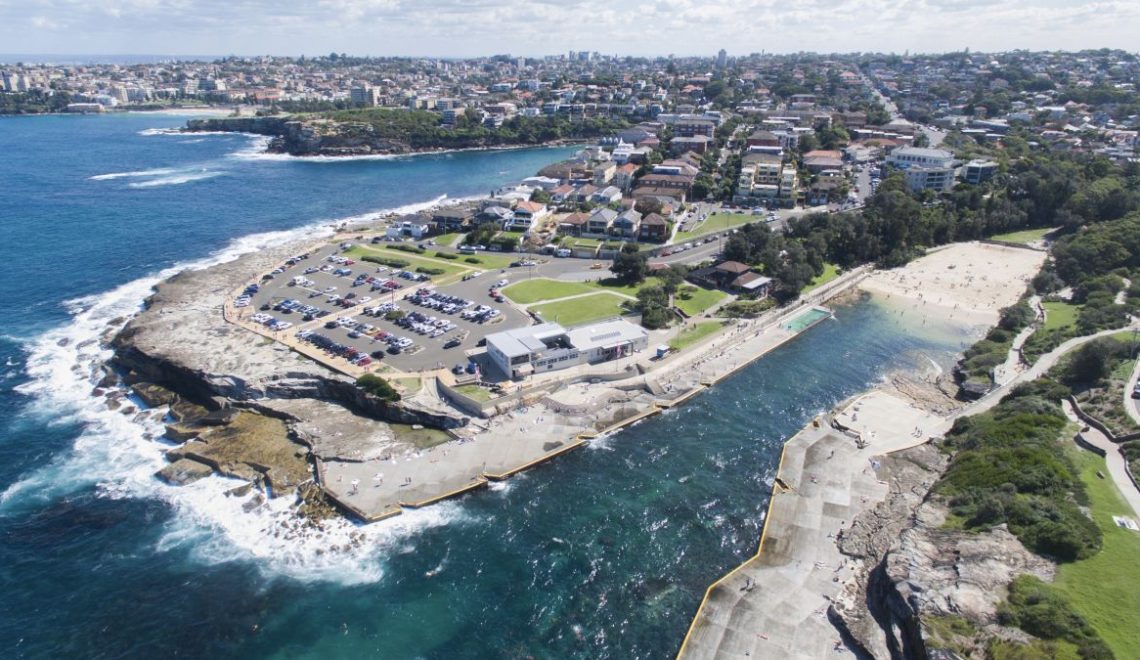
Clovelly Beach has long held a special place in Sydney’s coastal story. Known in its early days as “Little Coogee”, this narrow, sheltered bay has attracted swimmers, snorkellers and families for well over a century. Today it’s loved for its calm waters and relaxed vibe, but beneath the surface lies a fascinating history filled with colourful characters, lost landmarks and much-loved local legends.
From Indigenous Fishing Grounds to “Little Coogee”
Long before European settlement, the Clovelly area was used by Indigenous Australians for fishing and hunting. In the 1830s, early European settlers were drawn to its rich fishing potential, with large land grants changing hands as the area developed.
Because of its proximity to Coogee, the bay became known as Little Coogee, a name that stuck throughout the 19th century. One of the area’s most striking landmarks was Mundarrah Towers, a grand mansion built in the 1860s for Dr John Dickson. After his death, the property became home to his daughter Mary Dickson — a formidable racehorse owner who famously trained her horses on the headland and, according to reports, even exercised them in the ocean.
Early Swimming, Mixed Bathing and Beach Scandals
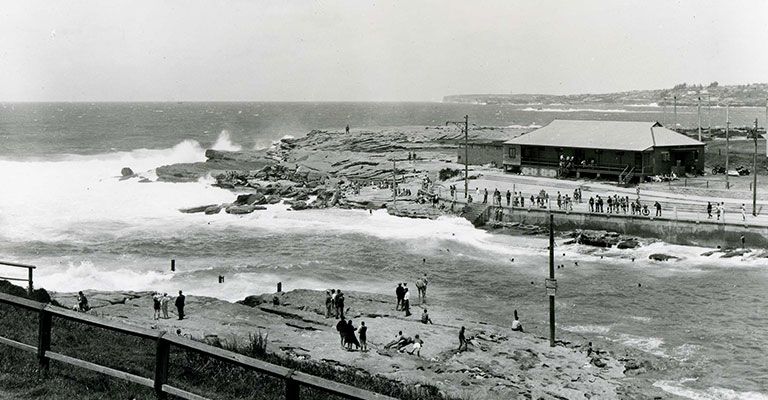
Little Coogee became a popular swimming spot in the late 1800s because it allowed “Continental bathing” — mixed-gender swimming, which was controversial at the time. To make the beach more accessible for women, a ladies’ bathing house opened in 1899, offering towels and dressing gowns for hire.
Not everyone followed the rules, however. Newspaper reports from the era complained of men swimming in inappropriate attire — or none at all — which drove some women away during a time when neck-to-knee swimwear was the norm.
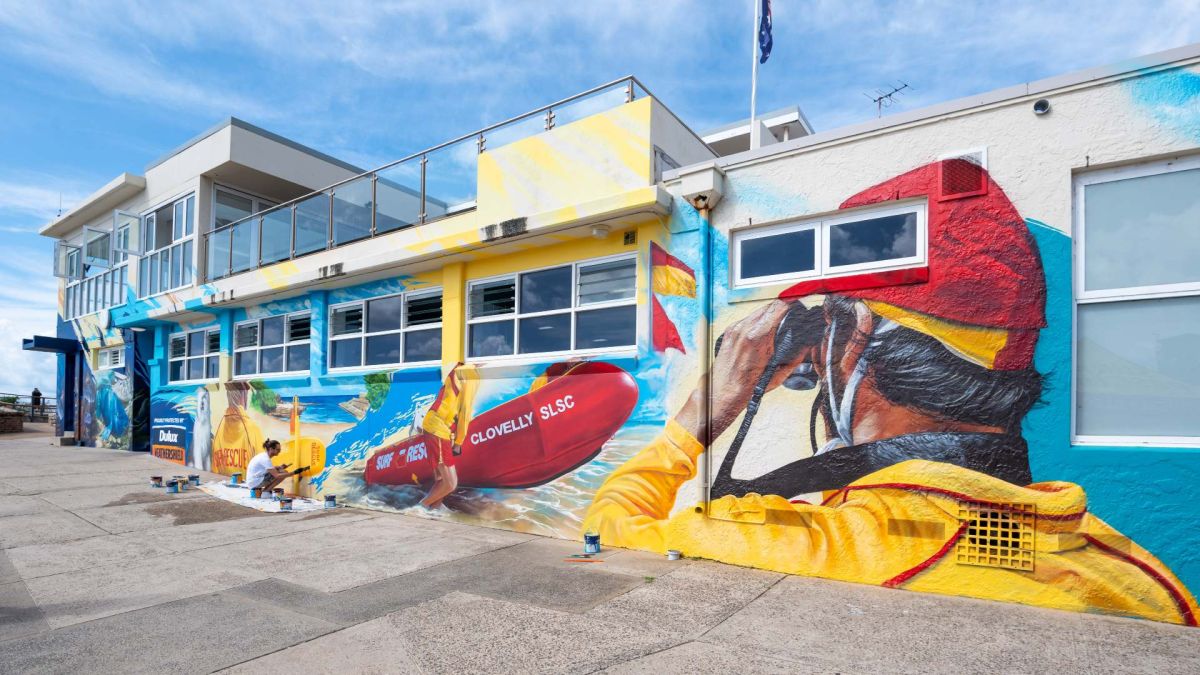
A Surf Life Saving Brigade was formed in 1907, and Clovelly Surf Life Saving Club remains an important part of the beach community today.
Crowds, the Pool and Depression-Era Works
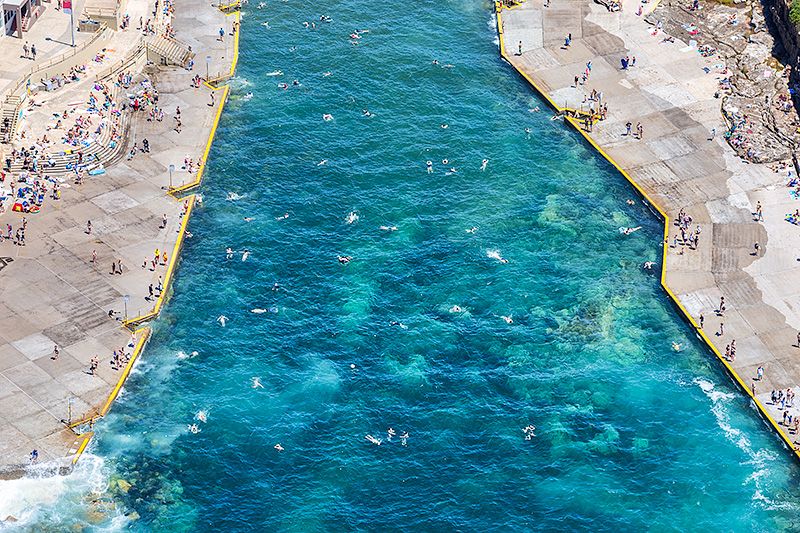
Clovelly’s popularity only grew. On a sweltering night in January 1929, an estimated 15,000 people packed the beach — a remarkable crowd for such a small bay.
To better cater for swimmers and provide employment during the Great Depression, Randwick Council began major foreshore works in the 1930s. The iconic concrete promenade and access points were created, giving Clovelly its distinctive, pool-like feel. Around this time, Clovelly Pool was developed — Sydney’s first Olympic-size swimming pool.
The pool has seen its fair share of drama, from a carpet shark entering the water in 1952 to film auditions held there a year later for an underwater adventure movie.
Lost Icons: Springboards, Trams and Tunnels
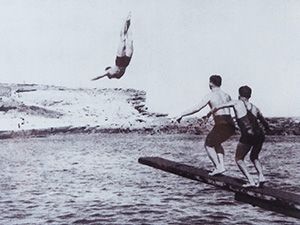
Older locals still talk about the “springboard steps” on the southern side of the bay. From the 1930s to the early 1950s, a diving springboard stood here, allowing brave swimmers to leap into the ocean. It was a beloved fixture for generations of Clovelly kids before being washed away by storms in 1954.
Other pieces of Clovelly history have also disappeared. Trams ran to Clovelly from 1913 until 1957, when they were replaced by the 339 bus. In the 1960s, underground military barracks and gun emplacements carved into the northern cliffs at Shark Point were demolished — once part of Sydney’s coastal defence system.
Bluey: Clovelly’s Most Loved Local
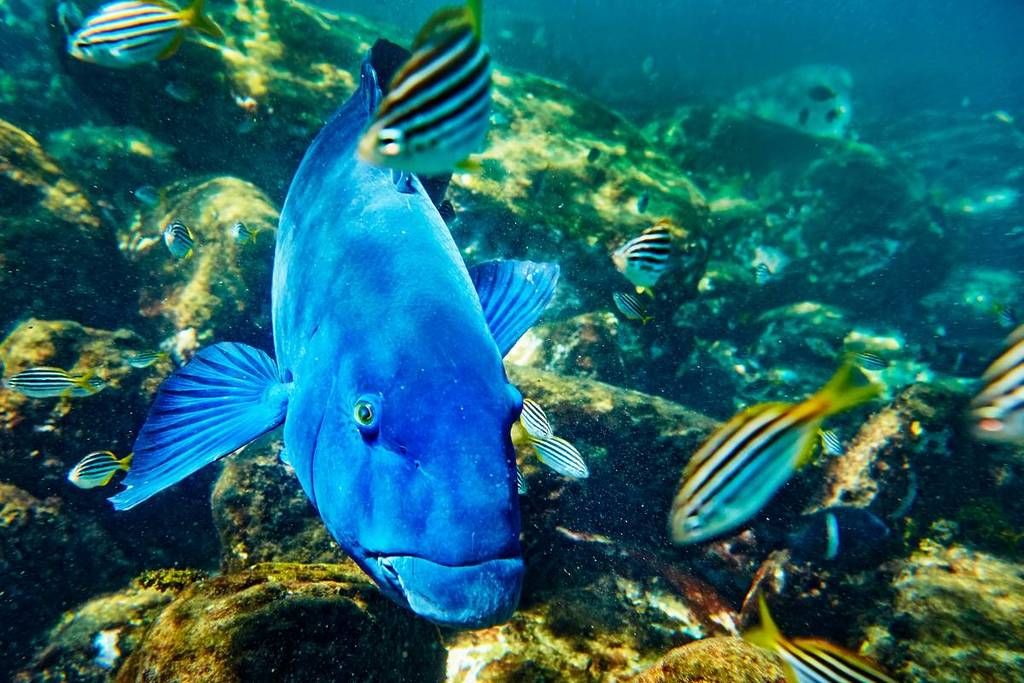
More recently, Clovelly gained a modern legend: Bluey, the eastern blue groper who swam alongside snorkellers for years. Though Bluey’s identity was often debated — and sadly linked to spear-fishing incidents — the groper became part of Clovelly folklore and a symbol of the beach’s vibrant marine life.
Clovelly Today
Today, Clovelly Beach remains one of Sydney’s most family-friendly coastal spots. Its calm waters, rock platforms and excellent snorkelling make it a favourite for mums, kids and nature lovers alike. While the springboards, trams and towers may be gone, Clovelly’s unique history continues to shape the special atmosphere locals and visitors cherish.
Clovelly isn’t just a beach — it’s a living piece of Sydney’s coastal story.
Summer at Barangaroo: Swim at Marrinawi Cove & Enjoy Harbourside Fun


