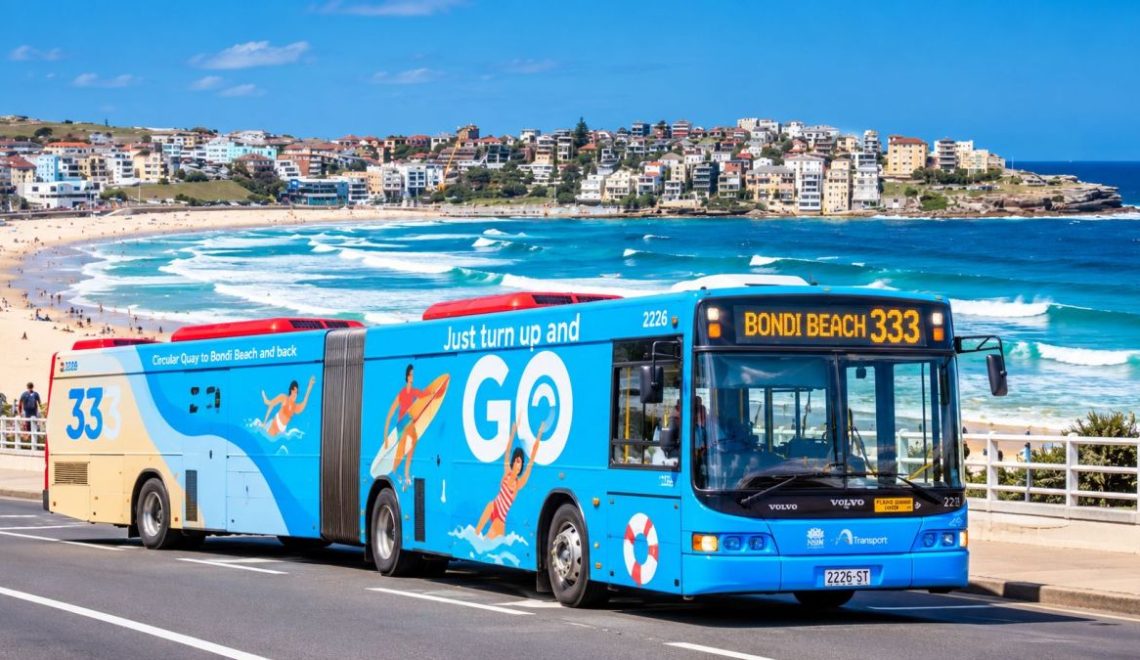
From millions of passenger journeys to unforgettable summer beach trips, the famous blue 333 bus has become much more than public transport. It’s a Sydney icon and an essential part of everyday life in the Eastern Suburbs.

There are a few things that immediately come to mind when you think of Bondi Beach: the golden sand, rolling surf, Bondi Icebergs, the famous coastal walk and, of course, the iconic blue 333 bus.
For locals, it’s a familiar sight travelling through Bondi Junction and down towards the beach. For tourists, it’s often their first introduction to one of Australia’s most famous destinations. And for thousands of commuters, students, workers and beachgoers, the 333 is an essential part of daily life.
First introduced in October 2006, the 333 reached its 20-year milestone in 2026. Over those two decades, it has evolved from a pioneering prepaid bus service into one of Sydney’s busiest and most recognisable public transport routes.
Today, the service carries more than nine million passenger journeys annually, connecting Sydney’s CBD with Bondi Beach and helping keep the Eastern Suburbs moving.
More than 9 million passenger journeys every year
-
9 million+ passenger journeys annually – making the 333 one of Sydney’s busiest bus routes.
-
750,000+ passenger journeys every month – connecting Sydney’s CBD, Bondi Junction and Bondi Beach.
-
173,000+ passenger journeys every week – carrying commuters, students, locals and beachgoers.
-
20 years of service (2006–2026) – from Sydney’s first full-time prepaid bus route to the iconic blue Bondi Link buses.
*Based on reported annual patronage of more than nine million passenger journeys in 2026. Monthly and weekly figures are calculated averages.
The numbers behind the 333 are remarkable. With more than nine million journeys annually, the route is one of the busiest bus services in Sydney.
On a typical weekday, around 21,000 passenger journeys are made on the service. That’s thousands of people travelling between the city, Bondi Junction and the beach for work, school, shopping and leisure.
And the demand doesn’t disappear when the working week ends. Unlike many commuter-focused routes, the 333 is particularly important on weekends, when visitors from across Sydney head towards the coast.
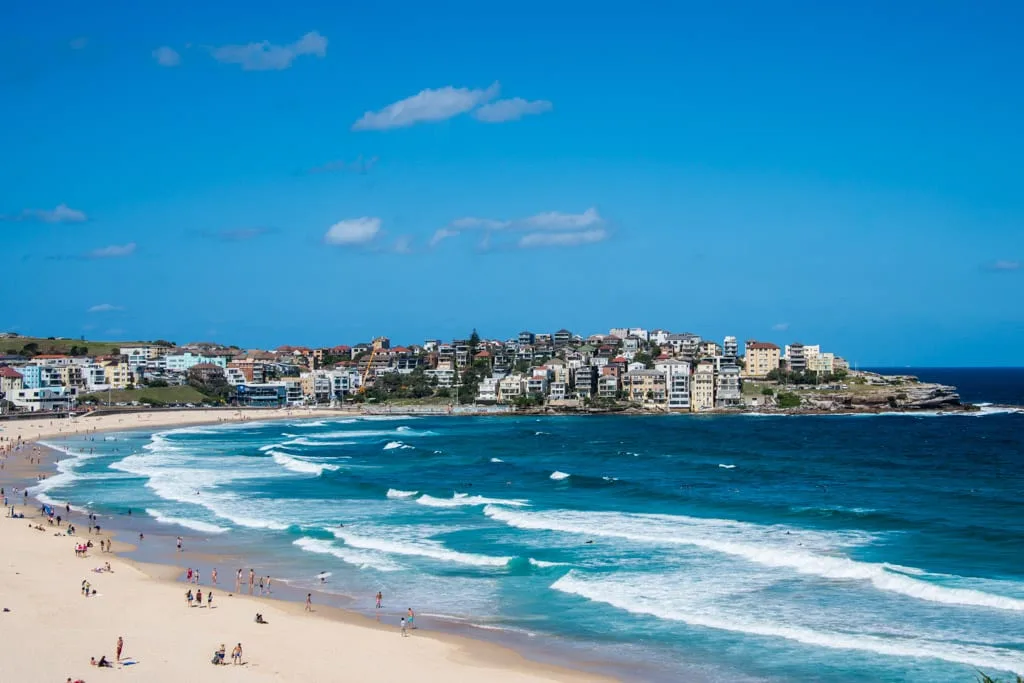
How busy does the 333 get on a summer Sunday?
Anyone who has travelled to Bondi Beach on a hot summer weekend knows just how popular the 333 can be.
As temperatures rise, the buses fill with beach towels, backpacks, surfboards and visitors eager to spend a day beside the ocean. Families heading for an early morning swim share the journey with tourists, hospitality workers and groups of friends.
Historical NSW Government figures have indicated that the route carried an average of approximately 26,000 passenger journeys per day during the summer months.
While an official figure specifically for a busy summer Sunday has not been established, this summer average illustrates the enormous demand for public transport to Bondi Beach.
The 333 plays an important role in helping manage that demand, providing an alternative to driving and reducing the pressure on already crowded local roads and parking areas.
From the original Bondi Bendy to the famous blue buses
The history of the 333 is also a story of how Sydney’s public transport has changed.
When the service launched in October 2006, it introduced Sydney’s first full-time prepaid-only bus route. Passengers purchased their tickets before boarding, helping reduce delays and improve travel times.
The service became associated with articulated buses, affectionately known as bendy buses, which could accommodate more passengers than conventional buses.
A major transformation arrived in September 2018 with the introduction of Bondi Link.
The service received its distinctive turquoise-blue branding, featuring colourful beach-inspired graphics that reflected Bondi’s surfing culture and coastal lifestyle.
The changes also introduced a high-frequency, turn-up-and-go approach, making it easier for passengers to travel without planning their journeys around a detailed timetable.
The transformation proved successful. Following the Bondi Link launch, the 333 rose from Sydney’s seventh-busiest bus route to its busiest.
In 2021, the 333 became a 24-hour service, providing a continuous transport connection between the city and Bondi Beach.
Why the 333 has become a Sydney icon

Most bus routes are known primarily by their number and destination. The 333 is different.
Its bright blue buses have become instantly recognisable, appearing in photographs of Bondi and forming part of the everyday streetscape.
The route also connects two of Sydney’s most famous locations: Circular Quay and Bondi Beach.
Passengers can travel from the harbour and the commercial heart of the city, through Oxford Street and Bondi Junction, before arriving at one of Australia’s best-known beaches.
For international visitors, catching the 333 is often part of the Bondi experience. For residents, the same journey may simply be their daily commute.
That combination of international recognition and everyday local importance is what makes the service special.
Bondi has its surfers, ocean pools, cafés and coastal lifestyle. The blue 333 bus has become another familiar part of that identity.
An essential service for Eastern Suburbs residents
Beyond its popularity with tourists, the 333 provides an important connection for people living and working in the Eastern Suburbs.
Residents use the service to reach workplaces, educational institutions, medical appointments, shopping centres and entertainment venues.
Bondi Junction is a major interchange along the route, connecting passengers with Sydney Trains and other bus services travelling throughout the Eastern Suburbs.
For families, the route offers a convenient alternative to driving, particularly when visiting Bondi Beach on busy weekends.
Anyone who has spent time searching for parking near the beachfront on a sunny Sunday understands the appeal of leaving the car at home.
The 333 also helps young people travel independently, providing connections between residential areas, schools, sporting activities and the wider city.
For hospitality and retail workers, the service is equally important, particularly for early starts, late finishes and weekend shifts.
It’s this mix of commuters, students, families, workers and visitors that makes the 333 such an important part of the local transport network.
Keeping Bondi moving as passenger numbers grow
Even after two decades, demand for the 333 continues to grow.
In 2026, the NSW Government announced the introduction of 50 new articulated buses, with 37 allocated to Waverley Depot, primarily to support the busy 333 corridor.
Articulated buses can carry approximately 50% more passengers than standard buses, making them particularly suitable for heavily used routes.
Additional capacity is important during peak commuting periods, major events and summer weekends when demand for transport to Bondi Beach is especially high.
As Sydney’s population grows and Bondi continues to attract visitors from around the world, high-capacity public transport will remain essential to the area’s accessibility.
Twenty years of the 333: A Sydney success story
The 333 has changed considerably since its introduction in 2006.
From prepaid tickets and the original bendy buses to distinctive blue branding, high-frequency departures and round-the-clock operation, the service has continued to evolve alongside the communities it serves.
Over the years, it has carried millions of journeys made by people heading to work, school, shopping centres, restaurants and the beach.
For some passengers, the 333 is a daily routine. For others, it represents a memorable day exploring Sydney or their first glimpse of Bondi’s famous coastline.
And for generations of Eastern Suburbs residents, the sight of a blue 333 travelling towards the ocean is simply part of what makes Bondi feel like Bondi.
Twenty years on, the 333 is much more than a bus route. It’s a connection between the city and the coast, a vital service for the local community and a recognisable symbol of Sydney’s beach culture.